
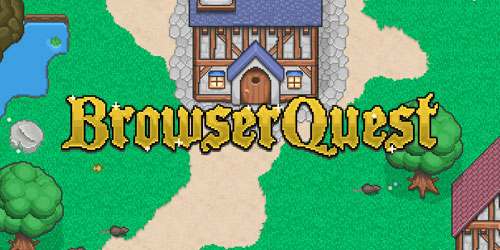
 The Mozillians have developed a retro style adventure game running entirely in the browser called BrowserQuest. You can even get the source code and extend it.
If I eat myself would I become twice as big or disappear completely?

The Mass Effect 3 Controversy
I have recently sumbled across something called the “Mass Effect 3 Controversy” where the Mass Effect series of games made the player’s choice a key element in shaping the story of its 100+ hour saga. But the disappointing endings (because they all render the decisions you made along the game irrelevant and basically boil down to a different color tint in the ending sequence) to the game left many fans unhappy.
In their unhappiness fans tuned creative. For example there was a $80k Child’s Play fund raiser and a huge cup cake delivery to Bioware.
But the real question remains: did they really screw up the ending (I can’t reproduce the link to a forum thread where a member of the writer team disclosed some insider info about the process the ending got written) and by the help of resourceful fans have a way of mending it with a genius twist or they really had a good ending, but cut it short in order to sell it as additional DLC?
At this point, I don’t know what I wish to be true. That Bioware just screwed up the finale the old fashioned way, or that they had a brilliant ending, cut it and made what they did show cryptic in order to sell DLC down the line. In my eyes, either situation is equally tragic.
– Forbes
I don’t want to mess with the homeless economy
I don’t want to mess with the homeless economy.
TLO interviews are the best 😉
Paintballing with Hezbollah
Taliban Field Commands
Take cover -> Allahu Akbar
Enemy spotted -> Allahu Akbar
Advance -> Allahu Akbar
Retreat -> Allahu Akbar
Fire at will -> Allahu Akbar
Hold fire -> Allahu Akbar
Ammunition needed -> Allahu Akbar
Medic -> Allahu Akbar
how do they plan and coordinate everything by just yelling two words?
I laughed so hard 😀
Working with professionals
mad al-laazim
How Black People See White Culture: Eastern Alps
A mockumentary on How Black People See White Culture … in this case the Eastern Alps … with an awesome explanation for “Wanderlust.” 😀
Der Islam als sozialer Pflegefall?!
Auszug:
In Deutschland hat sich die Forschung hingegen mehrere Jahrzehnte später in den 1990er Jahren zunehmend der Frage nach Religion in Zusammenhang mit Migration gewidmet. Dabei stand der Islam meistens als empirisches Fallbeispiel im Vordergrund. Doch die Auseinandersetzung mit dem Islam erfolgte überwiegend religionsimmanent und war bis auf Ausnahmen kaum verankert in religionssoziologische oder migrationssoziologische Kontexte. Der Islam erscheint in Deutschland als Sonderfall und nicht als ein Beispiel unter anderen. Muslime sind damit etwas anderes, entwickeln aus sich selbst und ihrer religiösen Tradition, was sich nicht mit gesellschaftlichen Verhältnissen vertragen will. Sie sind lange Zeit weder von der Öffentlichkeit noch von wissenschaftlicher Seite als eine gesellschaftliche Teilgruppe betrachtet worden, die sich in Wechselwirkung mit sozialen Kontexten und Bedingungen im Lande unter anderem mit Religion auseinandersetzt. Sie sind je nach Betonung ihrer ethnischen Eigenschaft etwa als „Türken“ oder ihrer religiösen als Muslime als „homines religiosi“ betrachtet worden, die einer Religion zugehören, die grundsätzliche Inkompatibilitäten mit der „christlich-jüdischen“ Kultur aufweist.